Nigeria's Health Campaign Transformation
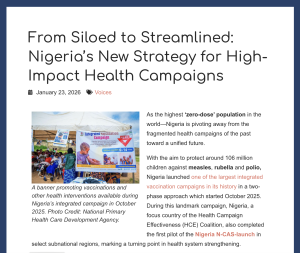
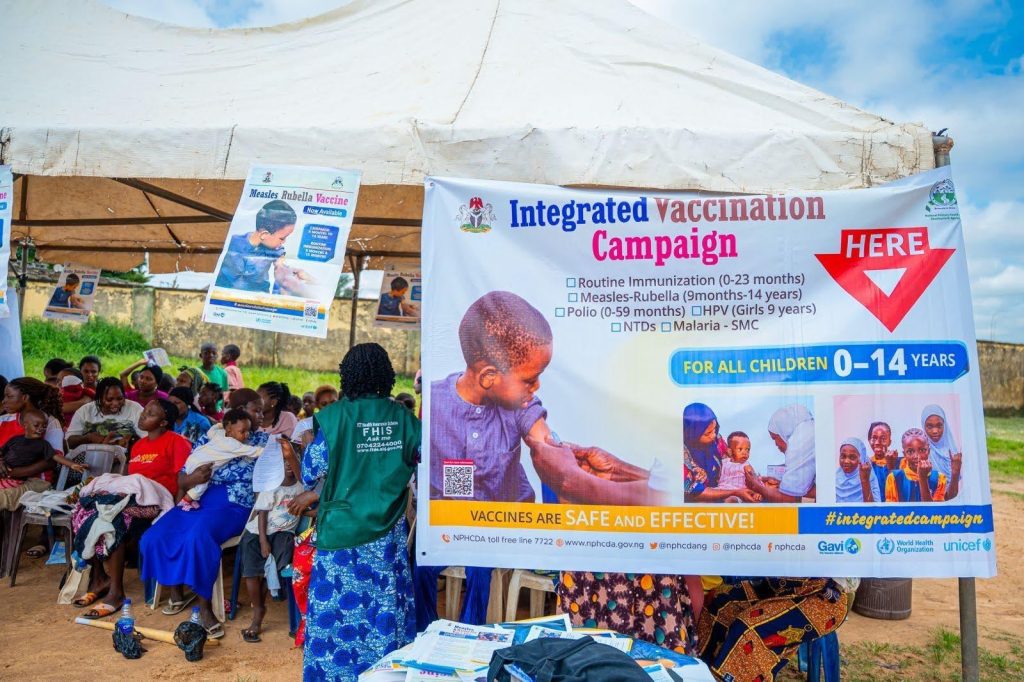
Nigeria recently launched the largest integrated vaccination campaign in its history, aiming to protect 106 million children against measles, rubella,and polio. This marks a turning point in the country’s approach to planning, implementing, and measuring campaigns.
More than 2.1 million Nigerian children have never received a single dose of critical childhood immunizations—the highest in the world. Polio outbreaks pose a serious threat, and Nigeria bears around 27% of global malaria cases and 25% of all global NTD cases. Prior to 2025, Nigeria conducted over 20 health campaigns annually, but few of them were integrated. This fragmentation strained the health system, sparking the country to reform its approach to health campaigns.
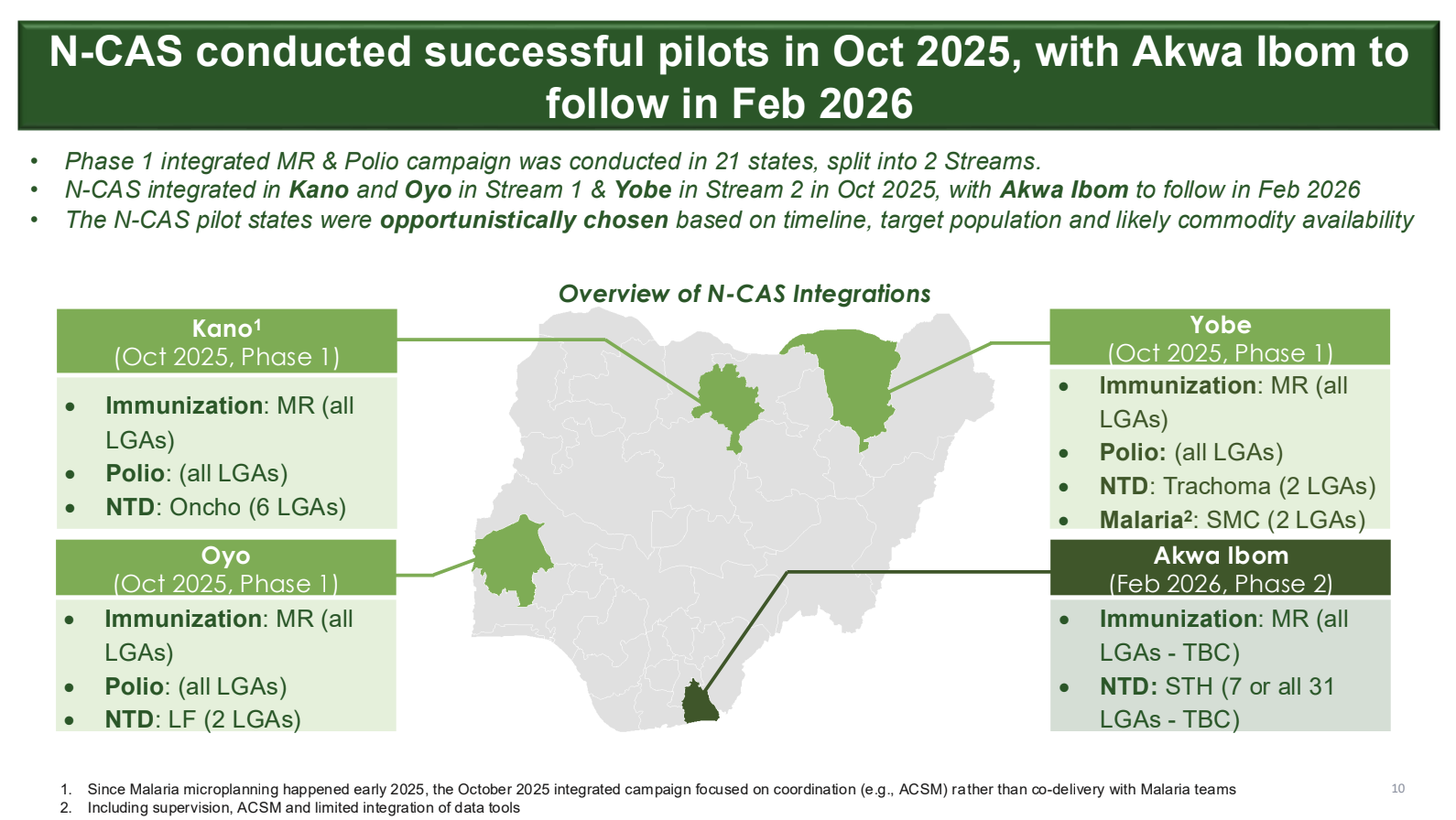
Nigeria adopted the Nigeria Collaborative Action Strategy (N-CAS) as part of this effort. In October 2025, the N-CAS was piloted in three states—Kano, Oyo, and Yobe—providing the first opportunity to integrate malaria and neglected tropical disease (NTD) interventions with childhood immunizations and polio vaccination. In February 2026, the second phase of the pilot took place in Akwa Ibom.
N-CAS: A New Strategy for Campaign Integration
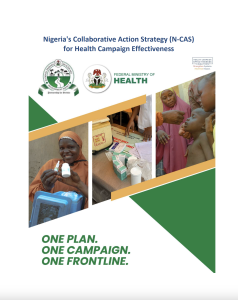
The N-CAS is a 5-year strategy that provides a framework for collaboration amongst campaign programs and health services. It aims to maximize the impact of campaigns on health outcomes while strengthening Nigeria’s health system to provide high-quality, sustainable, and equitable services.
Nigeria is a focus country for the Health Campaign Effectiveness (HCE) Coalition, and was one of the first to adapt the recommendations of the Collaborative Action Strategy for Health Campaign Effectiveness (CAS). The N-CAS development was led by the Federal Ministry of Health and Social Welfare and the National Primary Health Care Development Agency, with support from the HCE Coalition.
Nigeria's Collaborative Action Strategy Journey
Phase 1: Socialization & Readiness
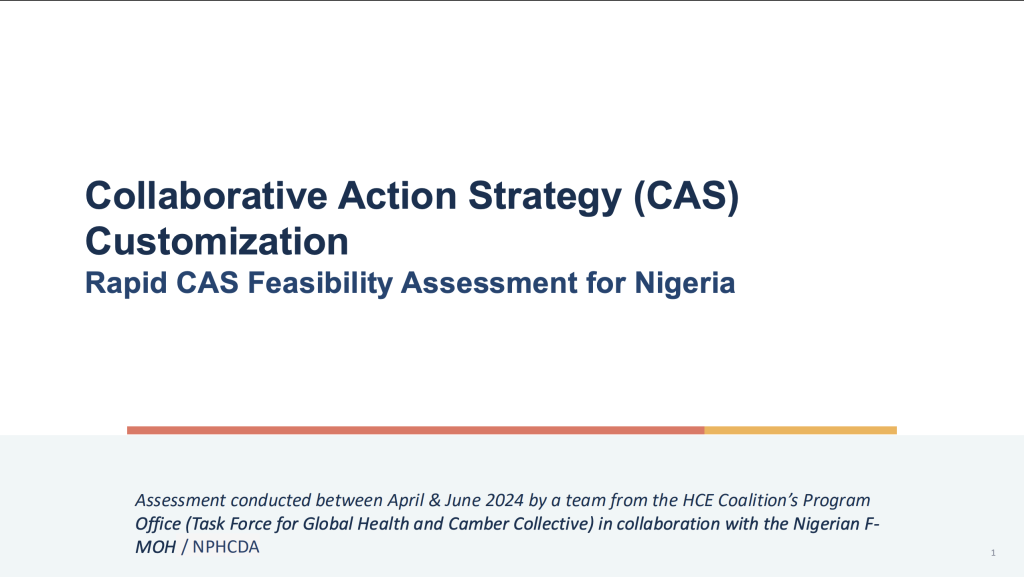
Nigeria first conducted a readiness assessment and SWOT analysis, including a scan of existing campaigns, health system capacities, and key partners integral to adopting CAS recommendations. Nigeria took a sequenced approach by anchoring it to Nigeria’s Sector-Wide Approach (SWAp) initiative, gathering insights, and systematizing collaboration through a national coordination body co-chaired by the Executive Director of the National Primary Care Development Agency, Dr. Muyi Aina, and the Director of Public Health of the Federal Ministry of Health and Social Welfare, Dr. Godwin Ntadom.
The National Coordinating Body was supported by a technical working groups comprised of technical leads across health programs to steer the N-CAS customization and implementation.
See below for outputs of this phase, including the feasibility study report and video from Dr. Muyi Aina demonstrating Nigeria’s commitment to the new approach.
Phase 2: Customization Planning
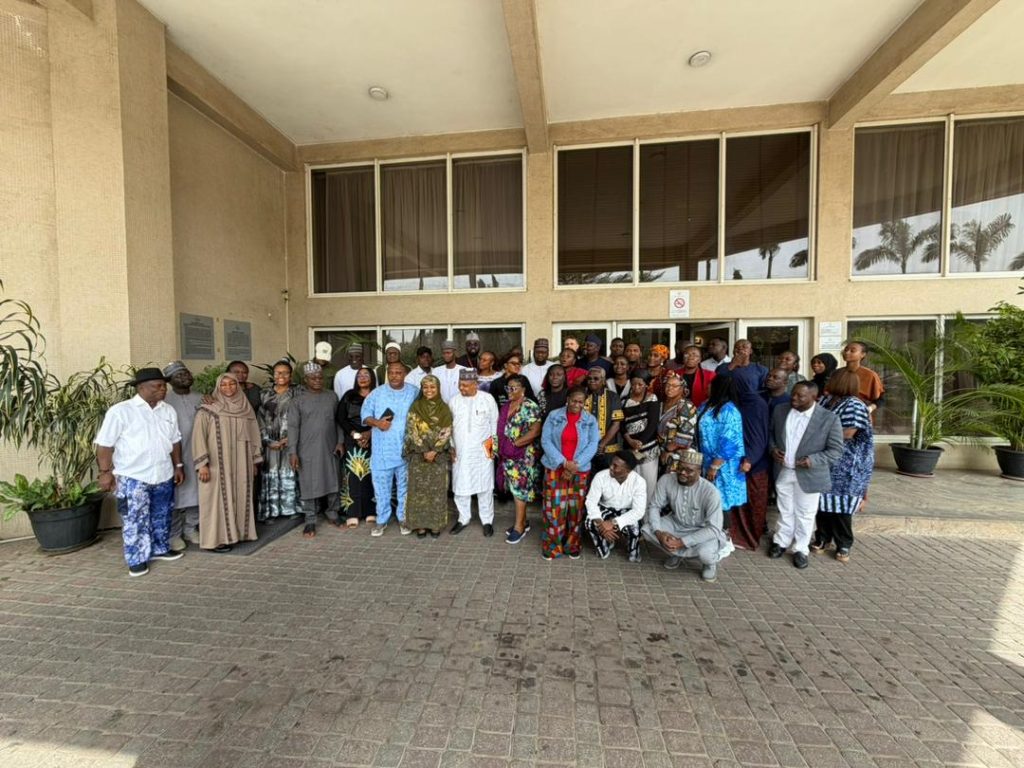
In the second phase, the CAS recommendations were customized to Nigeria’s unique context. Subgroups of the technical working group focused on planning, MERLA (monitoring, evaluation, research, learning, and adaptation), and financing. Stakeholder workshops pinpointed financing and policy solutions, identified campaign bottlenecks and opportunities for reform. A national stakeholder briefing was also held during this phase to brief stakeholders on plans to customize and implement the CAS recommendations. Participants heard an overview of the CAS and its 12 recommendations for enhancing country-level impact and coordination, as well as how the anticipated outcomes of the CAS align with Nigeria’s Strategic Vision for the Health Sector, which focuses on effective governance, unlocking value chains, health security, and creating a more efficient, equitable and quality health system. These shared efforts resulted in the final N-CAS plan.
See below for outputs of this phase, including the final N-CAS plan, a recording of the national stakeholder briefing and slides.Â
Phase 3: Implementation
In October 2025, the N-CAS was piloted in three states—Kano, Oyo, and Yobe—providing the first opportunity to integrate malaria and neglected tropical disease (NTD) interventions with childhood immunizations and polio vaccination. In February 2026, the second phase of the pilot took place in Akwa Ibom.
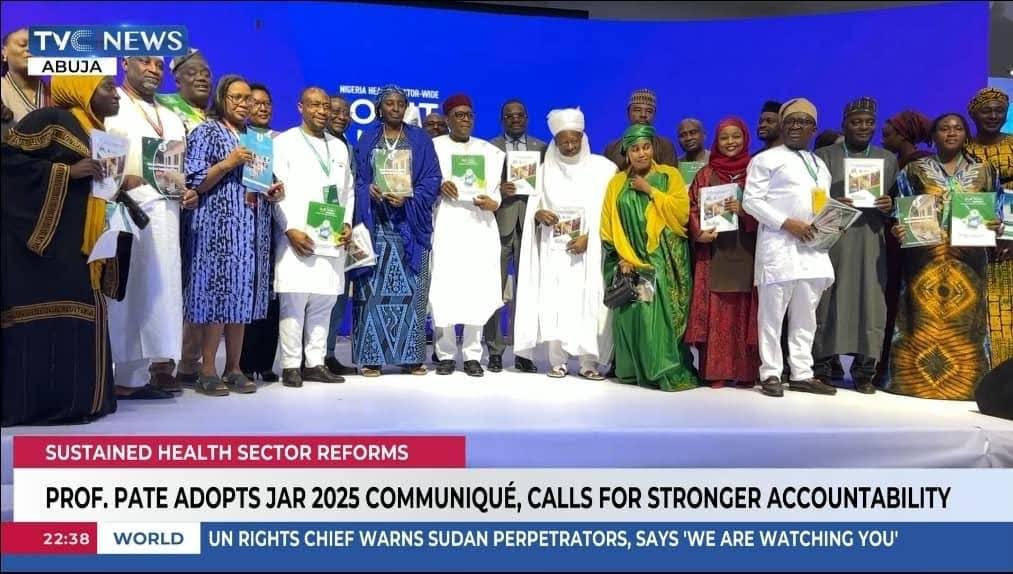
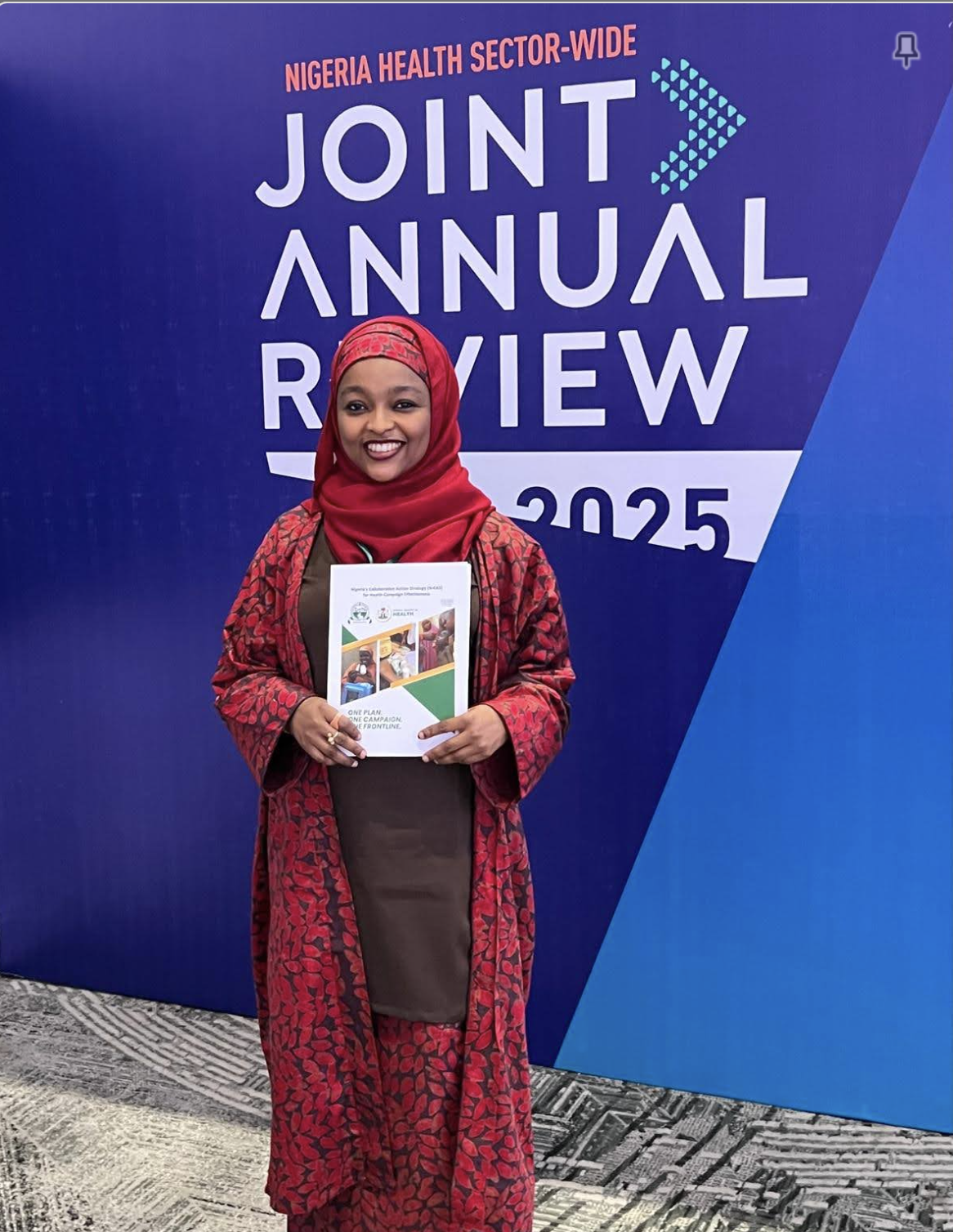
The N-CAS was officially launched as a national policy in November 2025 at the health sector’s Joint Annual Review (JAR).
See below for media that illustrates this phase, including an article about the October campaign, a video about integrating campaigns in Kano, and photos from the JAR event.Â
Impact of the Integrated Campaign
In late 2025, Nigeria shared its journey in planning and implementing the N-CAS with partners in a webinar presented by Zaiyanatu Abubakar Umar of the Federal Ministry of Health and Social Welfare and Dr. Adejoke Kolawole of the National Primary Health Care Development Agency.Â
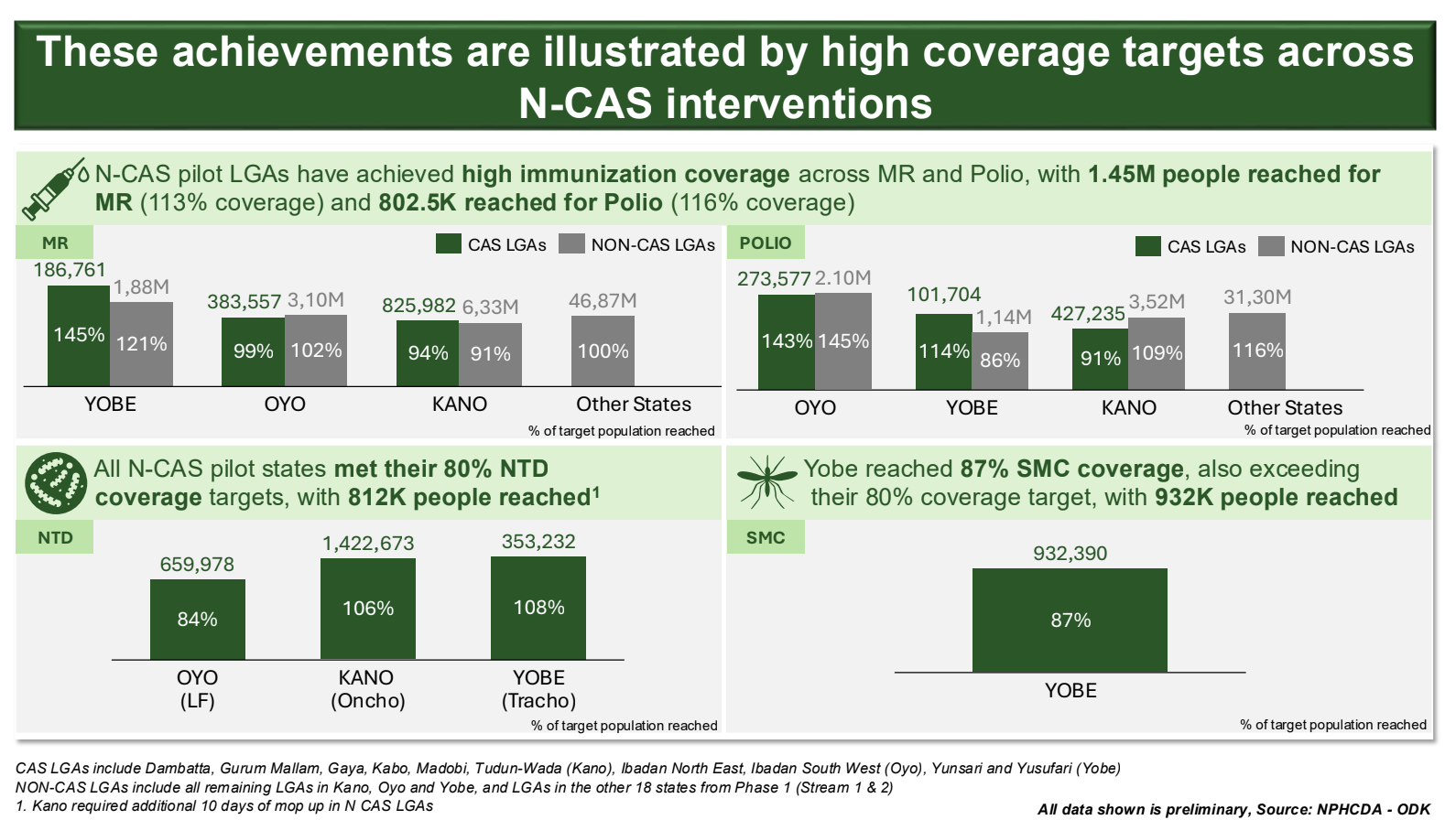
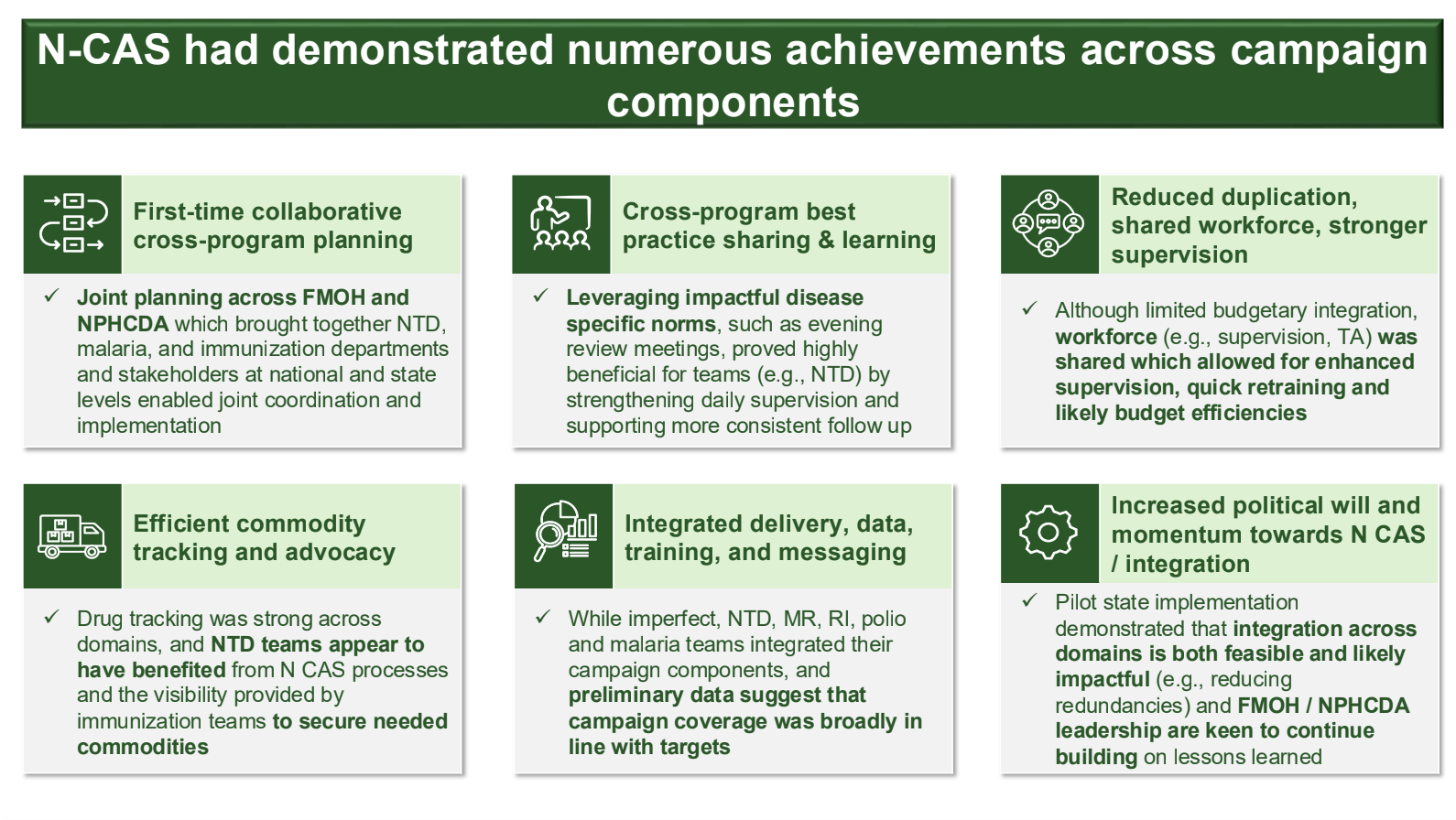
Early analysis of the October 2025 campaign shows significant impact.
- 20.3 million people reached with measles, rubella, and polio immunization
- All pilot states achieved over 80% coverage for NTD services (812k people reached)
- 87% coverage for seasonal malaria chemotherapy in Yobe (932k people reached)
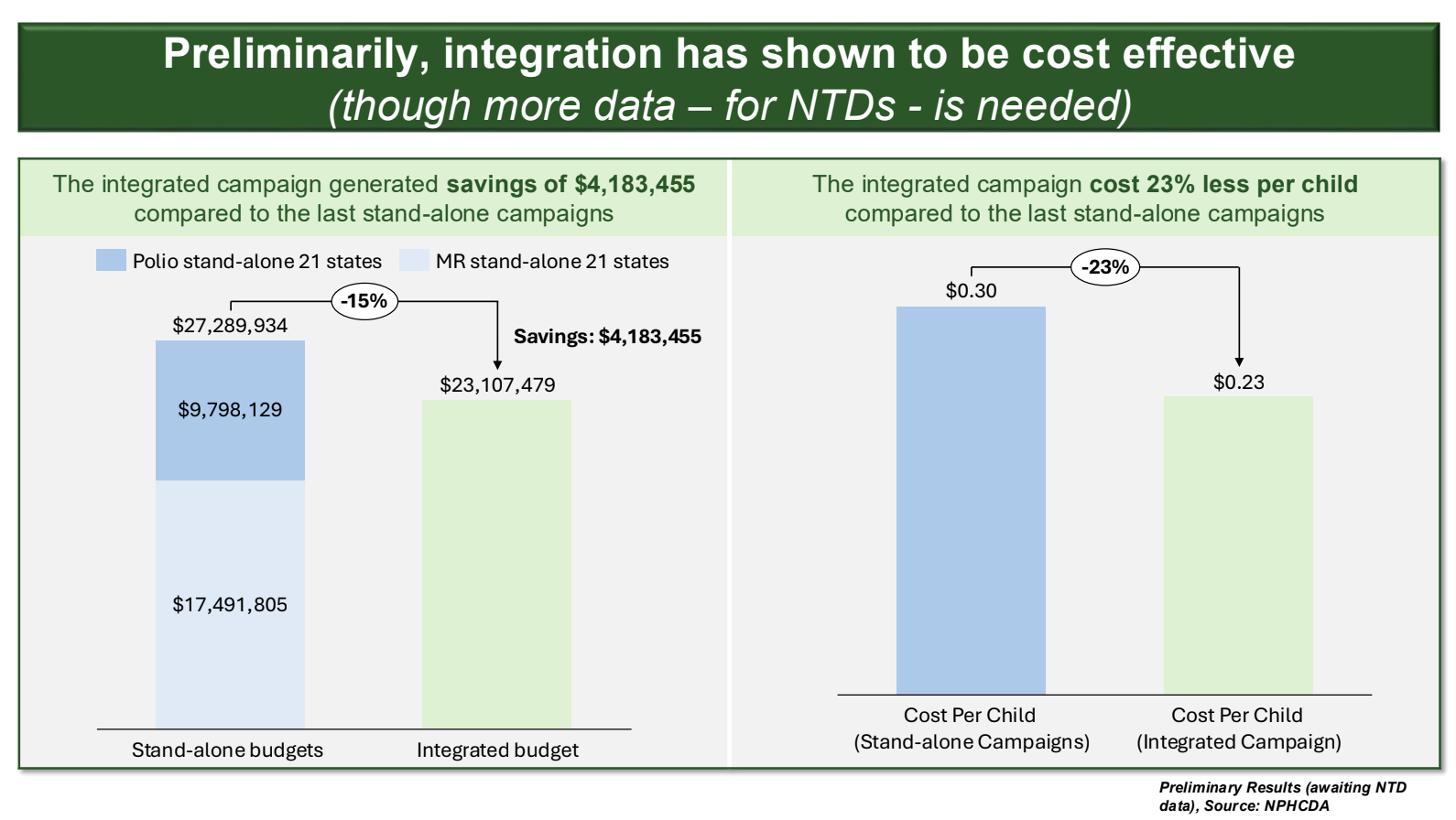
- Cost savings of $4.18 million from the integrated campaign compared to previous stand-alone campaign, or 23% less per child
Watch the presentation below to hear the full story from Dr. Umar and Dr. Adejoke.
Lessons Learned
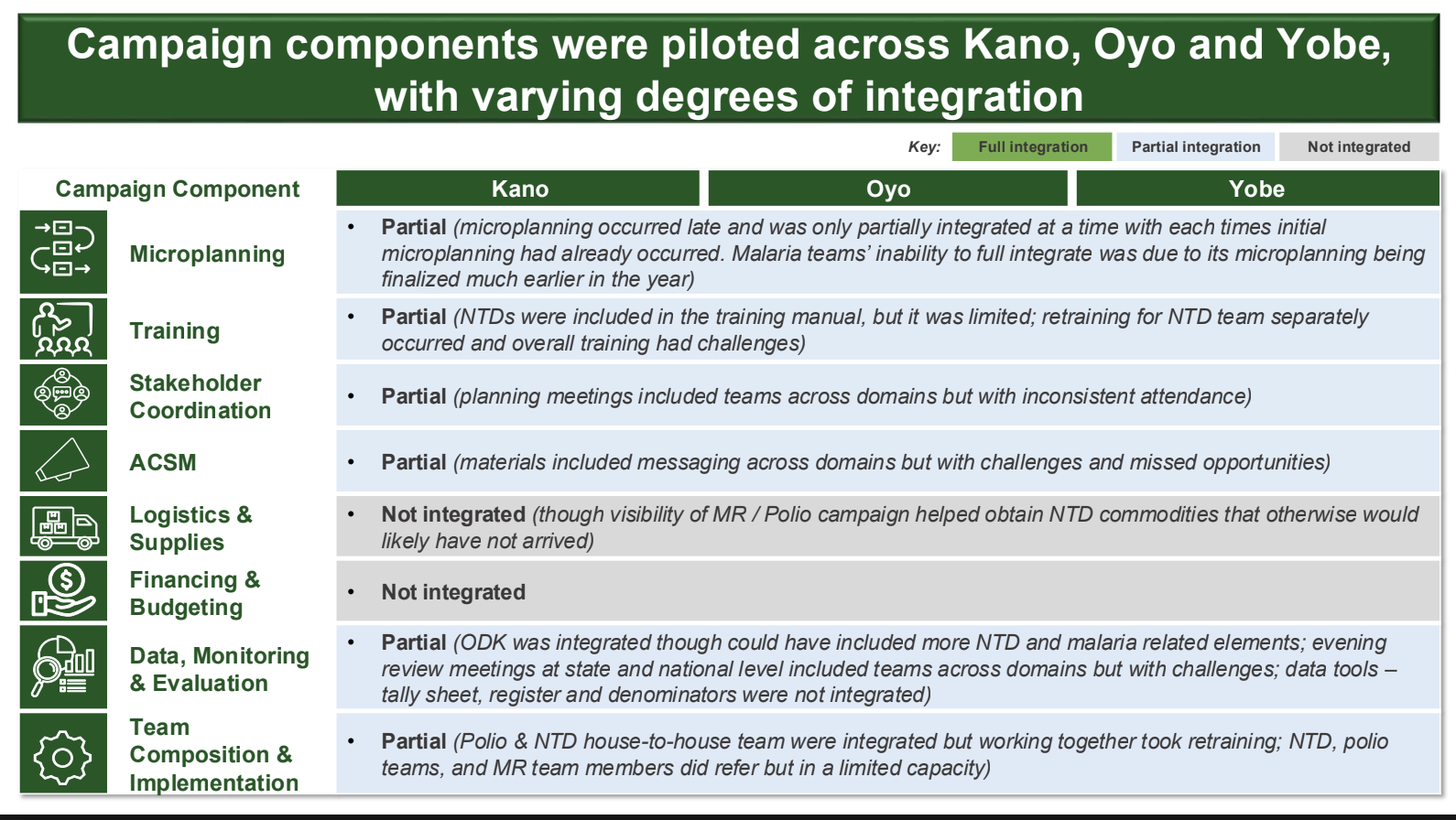
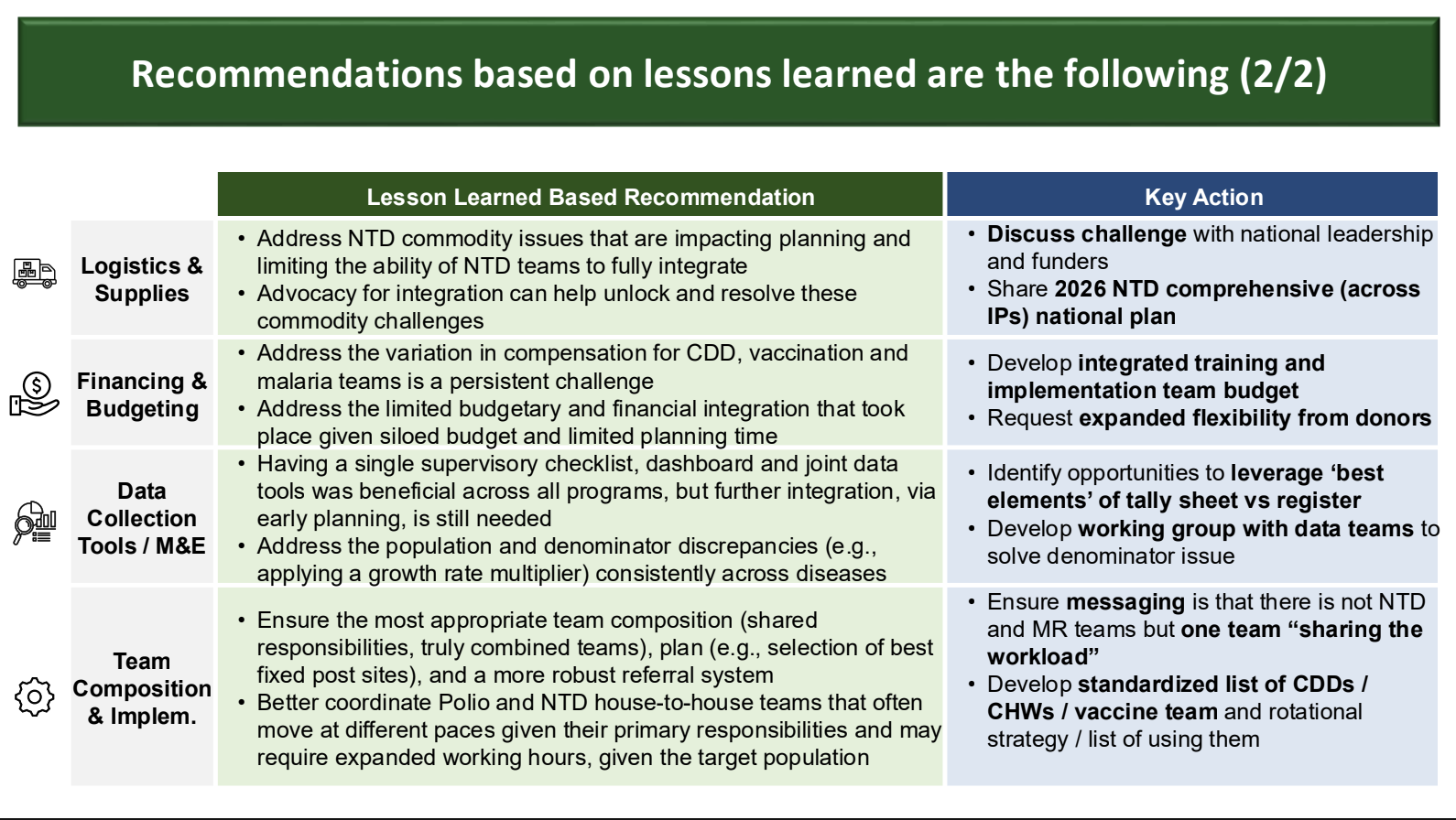
Select slides featuring preliminary campaign outcomes, lessons learned, and recommendations going forward.Â
Messages from N-CAS National Coordinating Body co-chairs about Nigeria’s pilot experience and lessons learned.
N-CAS Sustainability
In early February 2026, Nigeria completed the final pilot phase of its Nigeria Collaborative Action Strategy (N-CAS) in Akwa Ibom State. During Phase II of Nigeria’s national campaign, the N-CAS guided the integration of Measles-Rubella (MR), Human Papillomavirus, routine vaccination, and soil-transmitted helminth (STH) interventions, extending Nigeria’s effort to translate its new policy direction into operational practice at the subnational level. The campaign was officially flagged off by the Governor of Akwa Ibom State, Umo Eno, on Tuesday, February 3rd and took place from February 4th to the 13th. The MR vaccine was introduced in all 31 local government areas (LGAs) in the state while STH interventions were implemented in seven LGAs: Eastern Obolo, Esit Eket, Ibeno, Ikot Abasi, Nsit Ibom, Onna and Uruan, using a school-based approach.
Preliminary administrative findings suggest that the integrated campaign achieved broad reach and is performing well against its planned coverage benchmarks, with especially strong early uptake of MR vaccination and encouraging delivery of STH interventions across the participating LGAs. The HCE Coalition program office was on the ground during the campaign and conducted interviews with the N-CAS Core Task Team Team, national, state and LGA health officials, and community members. We look forward to sharing more rich detail about the Akwa Ibom experience, including lessons learned and next steps for the N-CAS, with the broader Coalition in the coming months.
What's Next
The N-CAS Core Task Team’s current efforts are focused on cross-department campaign planning and socialization of a strategic, multi-year cross-campaign calendar. As more information becomes available, we will update this page and promote through HCE Coalition communications channels.Â