
By Teshome Gebre, PhD, M.Sc., Africa Regional Director, Task Force for Global Health and Senior Advisor, Health Campaign Effectiveness Coalition
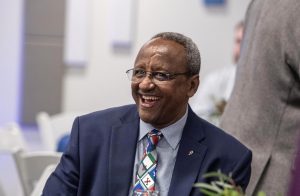 It was an ordinary February day in Addis Ababa. But for me, it marked a momentous occasion. I looked around the conference room, and at all of the faces of the Health Campaign Effectiveness (HCE) Coalition’s Leadership Team. WHO. UNICEF. The Gates Foundation. The Global Fund, Gavi, CDC, The Carter Center and Task Force for Global Health. They were all there, along with other experts on a range of diseases from around the world. Most important of all, were the senior officials from government health ministries and agencies.
“Have we really come this far?” I thought to myself. “How on Earth did we do it?”
Four years earlier, many of us in the room had formed the HCE Coalition, which is coordinated by my organization, the Task Force for Global Health, with funding from the Gates Foundation. We were bound by a mutual belief that cross-campaign integration is the key to impactful campaigns. At the time, we wanted to build a body of knowledge on emerging and promising practices to help guide all key stakeholders – funders, governments, multilateral organizations, NGOs, and other implementing partners – to collectively deliver more integrated, efficient and effective campaigns.
Then, just weeks after our founding, the COVID-19 pandemic struck, presenting what we worried could be insurmountable challenges for our mission. Yet somehow, we overcame them. This was more evident than ever, as I listened to senior health officials from Nigeria and my own country, Ethiopia, talk about their plans for adapting and implementing the HCE Coalition’s Collaborative Action Strategy (CAS) for Health Campaign Effectiveness.
As they spoke, I was struck by what we had accomplished over the past four years despite the many obstacles that COVID-19 had thrown onto our path. In fact, we had managed to do something we hadn’t even envisioned back in 2020. Yes, we had produced the knowledge base by commissioning dozens of implementation research and case studies on collaborative planning and integration. We had also managed to turn that knowledge into the CAS, a customizable framework for actionable change that holds all stakeholders to account – including global funding and implementing partners.
Like so many others who work in public health, when lockdowns began, the nascent HCE Coalition wasn’t sure how to proceed with its work. We didn’t know when the pandemic would end. Would malaria, neglected tropical disease, vitamin A/nutrition, polio and other immunization campaigns halt indefinitely? If so, where and when would they resume? How would we produce a body of knowledge if the world had come to a standstill?
Counterintuitively, the pandemic brought people together in many ways. Because COVID-19 halted or delayed so many health campaigns, there was an eagerness to join forces and find a way to ‘catch-up’, but to build back better. We found a way to forge ahead with our research by working creatively with partners around the globe. We quickly mastered the art of Zoom to hold meetings, and to host learning events on promising practices.
Once lockdowns had lifted around the world, we felt it was critical to translate all of this knowledge into a practical tool for designing and delivering effective, collaborative health campaigns. This tool would speak to all stakeholders – governments, UN agencies and other implementers, and funders – and their respective roles in financing, planning and implementing more effective health campaigns that strengthen health systems instead of overburdening them with inefficiencies.
Designing the CAS meant many marathon virtual meetings across multiple time zones for most of 2023. In the end, we consulted a diverse group of 50 individuals across 20 organizations to co-design the CAS.
I would be lying if I said it wasn’t frustrating at times – especially for my wife! One evening, she left the house for several hours, and when she returned, I was still on Zoom in the same meeting. She turned around and went right back out so she wouldn’t disturb my work. When she came back it was dark, and I was right where she left me, my face still glued to the screen. Despite these inconveniences, whether we were in Addis Ababa, Abuja or Atlanta, we persevered, committed to our mission.
On a more serious note, in the beginning it was challenging to convince Ministries of Health that the HCE Coalition Leadership Team was bringing something new and worthwhile to the table with the CAS. We heard from governments that they didn’t want more business-as-usual campaigns which had become increasingly fragmented due to disease-specific financing from the global health community. Once we made it clear that we envisioned working with them to reverse this trend and make campaigns more effective and systems stronger, Ethiopia and Nigeria both agreed to lead the multistakeholder process to adapt and implement the CAS in their countries.
I am hopeful that the CAS will serve to improve campaigns and systems, especially now that we have buy-in from the Ethiopian and Nigerian ministries of health. But it is also crucial that all stakeholders and implementing partners walk the walk when it comes to pooling resources and harmonizing funding.
It won’t be easy, but nothing worthwhile ever is. The people who sat beside me in Addis Ababa know that. It was their determination, dedication and resilience that brought us there in the first place. It was through collaboration that the CAS was born, and is now being nurtured with Nigeria’s and Ethiopia’s leadership. More challenges will undoubtedly come. What I am sure of is that we will confront them together, one 4-hour virtual meeting at a time in the middle of the night, if that’s what it takes.