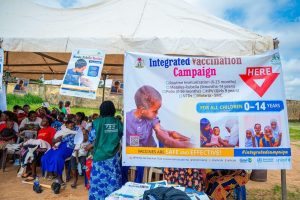
As the highest ‘zero-dose’ population in the world—Nigeria is pivoting away from the fragmented health campaigns of the past toward a unified future.
With the aim to protect around 106 million children against measles, rubella and polio, Nigeria launched one of the largest integrated vaccination campaigns in its history in a two-phase approach which started October 2025. During this landmark campaign, Nigeria, a focus country of the Health Campaign Effectiveness (HCE) Coalition, also completed the first pilot of the Nigeria N-CAS-launch in select subnational regions, marking a turning point in health system strengthening.
Leveraging the national campaign, the N-CAS was piloted in three states—Kano, Oyo, and Yobe—providing the first opportunity to integrate malaria and Neglected Tropical Disease (NTD) interventions with measles, rubella and polio campaigns.
Breaking the Silos: From 20 Campaigns to One Unified Strategy
The integrated campaign marked a historic shift from siloed, vertical campaigns to an integrated approach. Previously, Nigeria conducted over 20 different health campaigns annually, and fewer than 15% of these campaigns were integrated. This fragmentation strained resources, overburdened health workers, and caused community ‘campaign fatigue’. Nigeria recognized the urgent need for reform to improve health outcomes and streamline the use of financial and human resources.

Integration is no longer an option; it is a necessity. Over 2.1 million Nigerian children have never received a single dose of critical childhood immunizations—the highest in the world. Polio outbreaks pose a serious threat, and Nigeria bears around 27% of global malaria cases and 25% of all global NTD cases.
Nigeria has established a strategic blueprint for health called the Nigeria Health Strategic Reform Investment Initiative (NHSRII) as part of President Bola Tinubu’s new reform agenda. This is being implemented through the Sector-wide Approach (SWAp) under the guidance of the Coordinating Minister of Health and Social Welfare. This strategy seeks to reform the health system through sustained, government-led harmonization of efforts across health agencies, partners, and donors.
It is a means to “adopting a more coordinated approach between the Federal Government, State Governments, Federal Capital Territory, and development partners to achieve improvement in the health of all Nigerians at scale.”
In the area of health campaigns, N-CAS served as the vehicle for achieving SWAp’s objective. Where SWAp provided the vision and political will, the N-CAS provided the operational model for how to enact coordination and integration across health campaigns. The N-CAS is a 5-year strategy aimed at streamlining health campaigns, increasing operational efficiency, and harmonizing campaign activities. It was co-created by Federal Ministry of Health and Social Welfare (FMoHSW) and the National Primary Health Care Development Agency (NPHCDA).
“As co-chair for Nigeria’s Collaborative Action Strategy…I am quite proud of the strides we are making, some of the early successes, and lessons that we are learning as a result of our collaboration,” shared Dr. Muyi Aina, Executive Director, NPHCDA during a recent HCE Coalition Meeting.
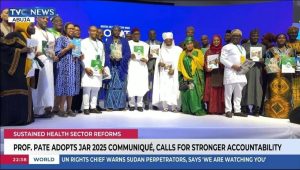
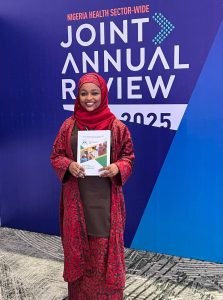
The N-CAS was officially launched as a national policy in November 2025 at the health sector’s Joint Annual Review (JAR).
Planning for success
The integrated campaign resulted in significant operational successes before implementation even began. It was the first time that microplanning activities were jointly conducted between the FMoHSW and the NPHCDA. This effort brought together NTD, malaria, and immunization partners at national and state levels to coordinate implementation.
Through the extensive planning phase, programs aligned activities to prepare the health workforce for the campaign, including enhanced supervision and training. The process helped to fast-track the coordination and arrival of commodities in one of the pilot states, ensuring availability at the time of the campaign. “If you fail to plan, then you are planning to fail. Planning must be taken seriously,” emphasized a state immunization officer from Oyo State.
Preparing communities and partners for the integrated campaign was also vital to success. “Before starting the program, there was community mobilization involving all stakeholders, which created awareness even before the program commenced,” said Adeboye Ahmmed, NTD Coordinator for Ibadan North East LGA in Oyo State. “The mobilizers [did] a wonderful job [resulting in] really a great turnout… The sweep team also educates and convinces people that it will not take much time [to receive services],” explained Jimoh Omowumi, a campaign supervisor from Ibadan South West LGA, Oyo State.

Olaide Abass, NTD Coordinator for the Ibadan South West LGA, Oyo State, was responsible for coordinating both NTD activities and supervising immunization. She noted that her combined responsibilities allowed her to streamline training by teaching teams how to merge services effectively, reducing duplication and improving coordination. This made execution easier and contributed to better alignment across programs, particularly in integrating drug distribution with immunization efforts.
The Bottom Line: reach, savings, and the “transfer of trust”
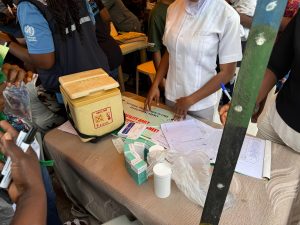
The inaugural phase of the N-CAS pilot in Kano, Oyo, and Yobe proved that integration is as much about social connection as it is about logistics. All three pilot states met or exceeded their targets, achieving over 80% coverage across disease interventions.
A notable driver of this success was the transfer of trust that occurred when different health teams joined forces. In many regions, NTD programs have spent years building deep rapport through door-to-door community work. By merging these efforts with vaccinations, health workers were able to leverage that existing intimacy to reach children who had previously been invisible to the system. “Integrating NTDs with vaccines helps us reach more children because NTDs get us into every household,” explained Dr. Abubakar Gali Zarewa, State NTD Coordinator for Kano State. This community-based approach acted as a “key,” unlocking household access and allowing the trust earned by one program to protect children across others.
This efficiency was reflected in the financial data as well. By eliminating duplicate efforts in advocacy, communications, and delivery, the integrated measles-rubella and polio budgets alone saw a national savings of more than USD 4 million. These gains prove that when the health system speaks with one voice, it doesn’t just save money—it builds the confidence necessary to save lives.
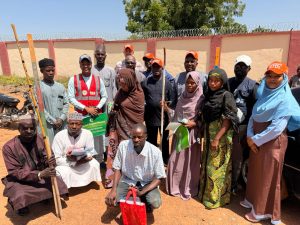
The context of trust
Unlike facility-based services where families must travel to a clinic, NTD programs have historically relied on a Mass Drug Administration model. This involves community volunteers and health workers walking door-to-door, visiting every home to provide treatments. This “front-porch” healthcare builds a unique level of intimacy and accountability; when the person offering a vaccine is the same neighbor who has provided trusted NTD treatments for years, hesitation often disappears.
A brighter future for the health of Nigerians
The momentum is already scaling. With the pilot’s success confirmed, the second phase of the N-CAS-guided rollout is set to launch in Akwa Ibom State in February 2026—just two months from now. The lessons learned from this historic first phase are now the model for sustaining progress and expanding impact.
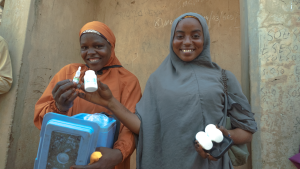
The impact is best seen in the communities themselves. Samira Muhammad, a teacher in Kano State, noted that the new integrated approach makes it easier for families to receive care and should continue “so that [we] get what [we] need all at once, at the same time.” Another community member shared that the increased knowledge and professionalism of the health workers inspired her to accept NTD treatment for her family for the first time.
This transition from siloed to streamlined is a hard-earned success. Its impact is a direct result of the ownership of national, state, and local governments, contributions of partners at international and local levels, and the resilience of communities. As Nigeria looks toward 2026, the promise of a more coordinated health system is no longer just a strategy on paper—it is a reality that is already working to deliver better health for all.