How can health campaigns work better together to reach more people, strengthen health systems, and deliver the care communities need?
This question was central to the 2026 Neglected Tropical Diseases (NTD) NGO Network (NNN) conference in Kigali, where the Health Campaign Effectiveness (HCE) Coalition shared practical lessons, country experiences, and tools to advance more effective and sustainable campaigns.
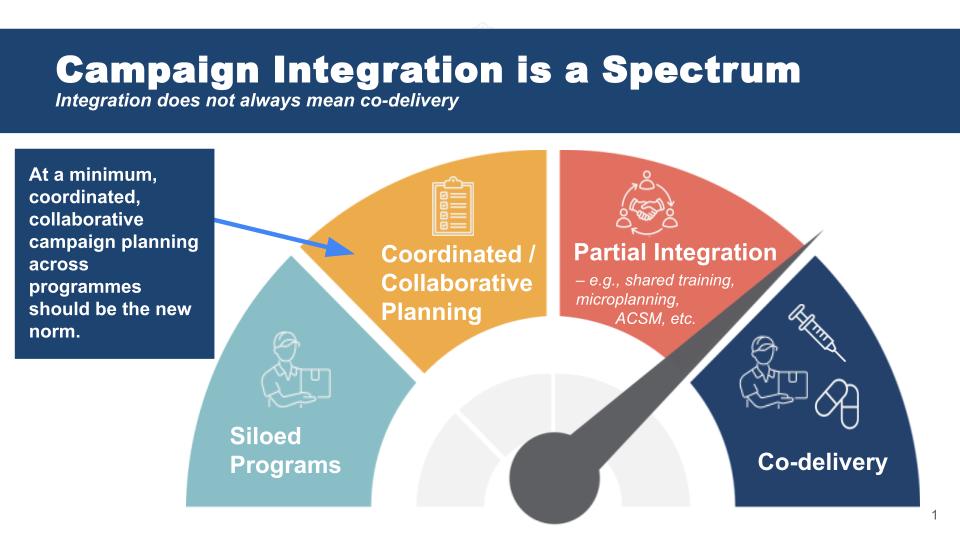
Across discussions, plenary contributions, and country flash talks, HCE reinforced three messages: integration is a spectrum, country ownership must come first, and stronger alignment across partners can accelerate progress.
Integration is a spectrum of activity, not a single model
Integration means more than delivering interventions together. It can begin with better coordination between programs and extend to shared planning, budgeting, microplanning, training, logistics, data, and monitoring, including co-delivery where appropriate.
The right approach depends on government priorities, country context, and opportunities to improve campaign effectiveness. Integration should not be pursued for its own sake; it should help programs use resources more effectively, reach underserved communities, and connect people with the services they need.
This is particularly important across the 21 NTDs, which differ in transmission patterns, affected populations, interventions, and delivery requirements. While shared platforms can create opportunities for efficiency, effective integration must also preserve the technical expertise and disease-specific approaches needed to achieve results.
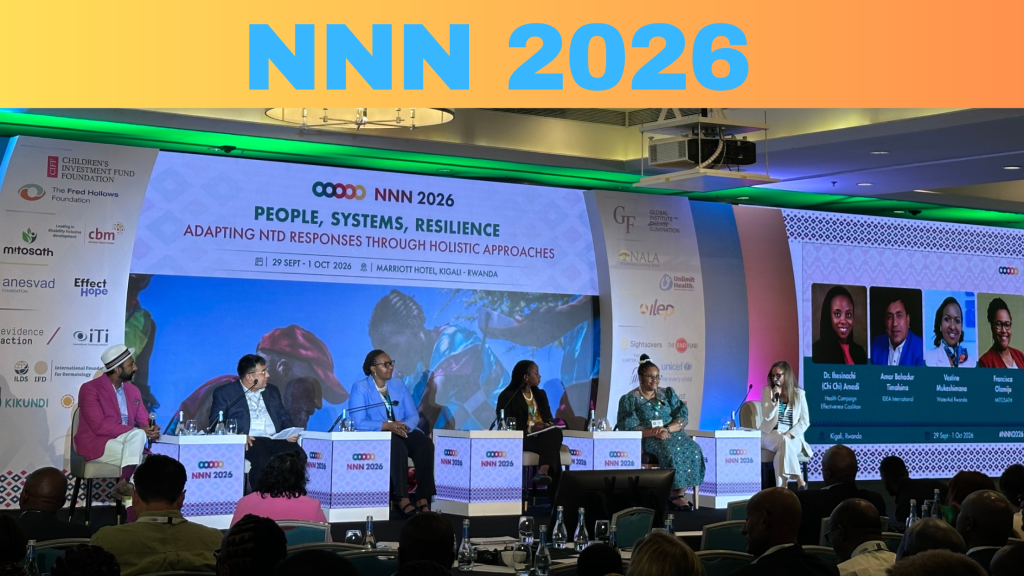
Chi Chi Amadi, the Health Campaign Effectiveness Coalition’s Senior Associate Director for Global Health Policy participates in a panel discussion during the conference where shares the Coalition’s perspective that campaign integration is much broader than co-delivery. Photo Credit: Zaiyanatu Abubakar Umar.
Country ownership turns strategy into action
The HCE Coalition’s Collaborative Action Strategy (CAS) was developed through three years of implementation research to help countries identify and pursue opportunities for more effective campaigns. Beginning in 2024, Nigeria and Ethiopia adapted the approach to their own priorities, institutions, and health systems, laying the groundwork for implementation.
Both countries established government-led governance structures that brought historically siloed programs together around shared priorities and supported more coordinated planning and delivery.
Zaiyanatu Abubakar Umar, Nigeria’s Collaborative Action Strategy focal point in the Federal Ministry of Health and Social Welfare and HCE Coalition member presented Nigeria’s approach to campaign integration, results, and lessons learned during flash talk sessions at the conference. Photo credit: Chi Chi Amadi.
In Nigeria, the Federal Ministry of Health and Social Welfare and the National Primary Health Care Development Agency brought immunization, malaria, and NTD programs and their partners into shared planning with state and local government teams.
The October 2025 pilots linked measles–rubella and polio vaccination with treatment for onchocerciasis in Kano, lymphatic filariasis in Oyo, and trachoma in Yobe. In February 2026, Akwa Ibom coordinated measles–rubella, HPV, and routine vaccination with school-based deworming in seven local government areas (districts).
Community drug distributors, together with traditional and religious leaders, supported outreach and mobilization, while school leaders reported that combined vaccination and deworming visits reduced classroom interruptions.
Lelisa Amanuel Jira, Ethiopia’s Collaborative Action Strategy focal point in the Ministry of Health and HCE Coalition member presented Ethiopia’s approach to campaign integration, results, and lessons learned during the flash talk sessions at the conference. Photo credit: Chi Chi Amadi.
In Ethiopia, the Ministry of Health led coordination through the National Steering Committee, and regional health bureaus worked with district teams to adapt plans and organize delivery.
This collaboration was evident in the May 2025 integrated measles campaign, which advanced the Big Catch-Up by offering routine vaccines to children who had missed them. Nutrition and maternal and child health teams also provided vitamin A supplementation, deworming, and referrals for care. Implementing partners supported planning, training, and delivery, while health extension workers worked with kebele leaders, women’s development groups, and religious leaders to engage communities.
During the conference flash talks, colleagues from Nigeria and Ethiopia shared practical experiences and lessons from implementation. Ethiopia illustrated how NTD mass drug administration can serve as a platform for wider services: community registers and drug distributors help reach target populations, while screening, prevention, and referral are added where teams have the capacity. Ethiopia also illustrated a common microplan covering training, mobilization, logistics, supervision, and reporting, supported by daily performance review. Nigeria emphasized aligning plans and pooling resources across programs.
The country presentations highlighted the practical work behind integration: aligning campaign plans, coordinating resources, and reviewing delivery together. They also emphasized adapting the approach to local capacity, with each program contributing according to its strengths and delivery requirements.
These experiences offer lessons for other countries and underscore the importance of documenting results carefully and adapting approaches to local needs.
Bringing tools, evidence, and partnerships together
The emerging NNN Integration Community of Practice (CoP) offers an opportunity to connect country experience with the wider expertise of NNN members and partners.
The HCE Coalition emphasized that the sector does not need competing or parallel approaches to integration. It needs greater alignment, beginning with a shared understanding of what integration means and the principles that underpin effective campaigns.
At the global level, the HCE Coalition and NNN can work together to encourage policies, guidance, and tools that reinforce consistent approaches to campaign effectiveness and integration. At the country level, the CoP can help NTD programs and partners align plans, investments, and implementation support with government priorities and broader national integration efforts.
Other flash talks at the conference also highlighted the value of practical learning, mentorship, community workforce development, and stronger evidence for sustainable financing. HCE’s CAS experience and campaign effectiveness toolkit can complement these efforts by helping countries assess integration opportunities, strengthen coordination, and identify what works in different contexts.
The opportunity is to make existing resources easier to find, adapt, and use—connecting country examples with practical guidance and peer learning rather than starting from scratch.
A shared opportunity for the next phase
The NNN conference demonstrated the value of bringing together organizations working across the full spectrum of NTDs. Each contributes distinct experience, technical expertise, relationships, and tools.
Looking ahead, the HCE Coalition and NNN can build on this momentum by aligning our integration frameworks and work plans, continuing to share country evidence, connecting partners through the Integration CoP, and developing practical resources that respond to country needs. Joint learning opportunities, including a proposed webinar on integrating NTD interventions into other health campaigns, can help bring these lessons to a wider audience.
The goal is not to create another layer of activity, but to strengthen what already exists. By bringing our respective experience, tools, and evidence together—and keeping government leadership and community needs at the center—the HCE Coalition and NNN can help countries make campaigns more effective, sustainable, and responsive to the people they serve.
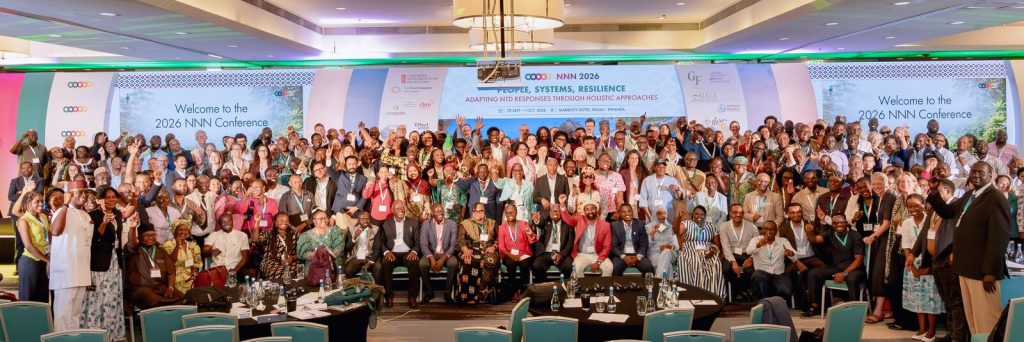
Group photo of attendees at the 2026 NNN conference in Kigali, Rwanda. Photo credit: NNN